
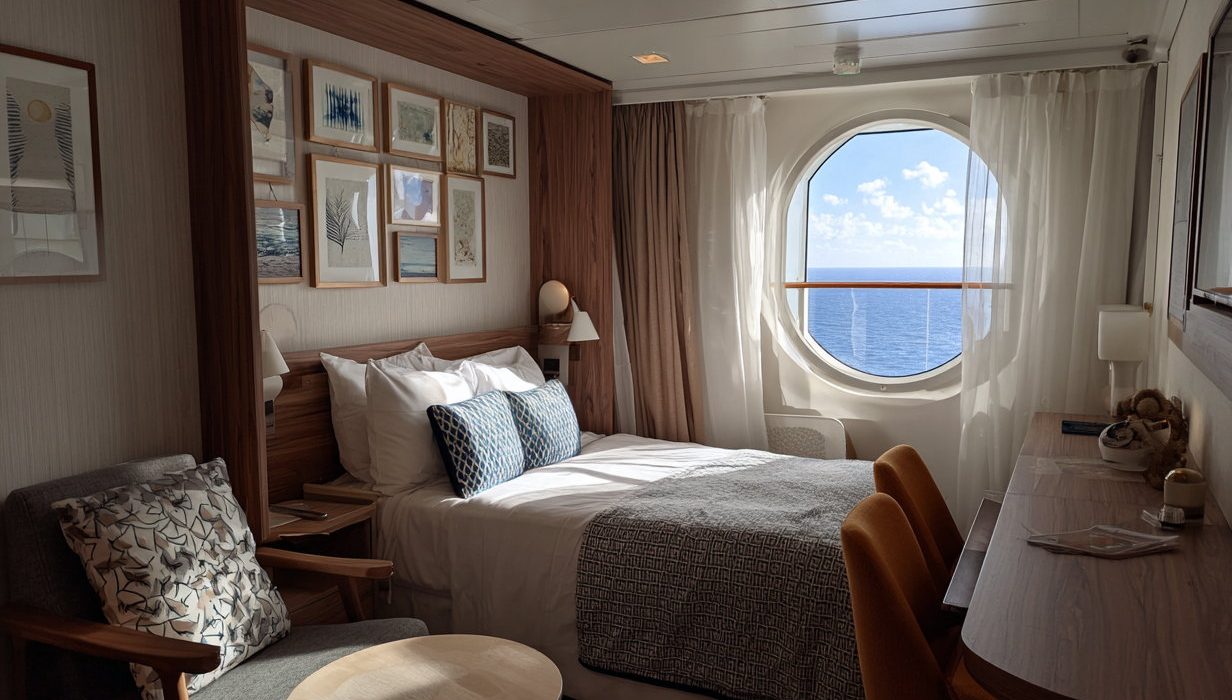
The idea of owning a cabin on a cruise ship sounds like something from a fantasy novel — wake up in the Caribbean one week, the Mediterranean the next, all while owning a piece of floating real estate. But this concept isn’t fiction anymore.
Cruise ship condominiums exist, and they’re exactly what they sound like: permanent residences aboard ships that travel the world year-round. The appeal is obvious — combine the security of homeownership with the adventure of perpetual travel.
Yet buying a cruise cabin involves complexities that traditional real estate never prepared anyone for.
Ship selection determines everything
The ship becomes your neighborhood. Pick wrong and you’re stuck with it for years.
Most residential cruise ships are smaller vessels designed specifically for long-term living rather than traditional cruising. These aren’t party boats with casinos and water slides — they’re floating communities with libraries, fitness centers, and restaurants that feel more like a resort than a carnival.
Ownership structure varies wildly
Here’s where cruise cabin ownership gets complicated in ways that would make a traditional real estate attorney reach for coffee (and maybe something stronger). Some ships operate as condominiums where you actually own the physical space and hold a deed — just like a regular apartment, except your apartment happens to float and change time zones regularly.
Others function as cooperatives where you buy shares in the corporation that owns the ship, which gives you the right to occupy a specific cabin but not actual ownership of the real estate itself. And then there are the programs that are essentially long-term leases dressed up to look like ownership — you get occupancy rights for a set period, but when that period ends, so does your floating home.
The paperwork alone can be bewildering, particularly because maritime law, international waters, and the flag state of the ship all influence which rules apply to your purchase. So you’re not just buying a home; you’re buying into a legal framework that might involve the laws of three different countries before breakfast.
Maintenance fees never sleep
Monthly fees cover everything from engine repairs to pool cleaning. The ship operates 24/7, so expenses never pause.
These aren’t like typical condo fees that cover lawn care and hallway cleaning. Ship maintenance includes fuel costs, crew salaries, port fees, and keeping a floating city operational across international waters.
Budget accordingly.
Itinerary control isn’t yours
The romance of waking up somewhere new loses its charm when that somewhere isn’t where you wanted to be, and there’s something unsettling about discovering that your morning coffee now costs twice as much because the ship docked in Monte Carlo instead of Barcelona. Most residential cruise ships plan their routes years in advance, but weather, politics, mechanical issues, and port availability can change everything — sometimes with just a few days’ notice.
You might buy your cabin expecting to spend winters in the Caribbean and summers in Alaska, only to find that new port restrictions mean you’re seeing a lot more of the North Sea than anticipated. And unlike a land-based home where you can drive to the grocery store you prefer, you’re entirely dependent on whatever’s available at each port.
Some stops offer world-class shopping and dining; others offer a small market and a single restaurant that may or may not be open when you arrive. The ship’s route determines not just your view, but your access to everything from medical care to your favorite coffee brand.
Financing gets creative
Traditional mortgage companies laugh at cruise ship condos. Banks struggle with collateral that moves.
Expect higher down payments, shorter loan terms, and interest rates that reflect the unusual nature of the investment. Some developers offer in-house financing, but read every clause twice. Maritime liens and international banking laws create complications that don’t exist with regular real estate.
Insurance defies convention
Your floating home faces risks that would never occur to a land-based homeowner, and standard homeowner’s insurance policies treat cruise ship cabins the way fire departments treat water: they just don’t mix. You need marine insurance, but you also need personal property coverage, liability protection for when your guests slip on a wet deck, and potentially separate coverage for when the ship is in different countries — because some policies exclude certain regions entirely.
Then there’s the question of what happens if the ship itself becomes a total loss, whether from sinking, fire, or mechanical failure so severe that the vessel becomes unusable. Unlike a house fire where you can rebuild on the same lot, if your cruise ship goes down, your real estate goes down with it, and there’s no land left to build on.
Some policies cover the cabin’s value; others only cover personal belongings; still others have maritime clauses that would take a team of lawyers to decipher. The insurance alone can cost more than some people pay for their entire housing budget.
Medical care floats with you
Ships carry medical staff, but serious conditions require helicopter evacuation or emergency port calls. Distance from major hospitals varies by thousands of miles depending on the route.
Consider your health needs carefully. That routine specialist appointment becomes a logistical challenge when your address changes every few days.
Prescription refills, emergency procedures, and ongoing care all require advance planning that land-based residents never consider.
Tax implications navigate international waters
Your tax situation becomes as complex as the ship’s route. Cruise ship residents often deal with tax obligations in multiple countries.
Income taxes, property taxes, and residency requirements vary depending on the ship’s flag state, your citizenship, and where you spend the most time. Some residents qualify for foreign earned income exclusions; others face double taxation.
Professional tax preparation isn’t optional.
Social dynamics stay contained
Living on a cruise ship means your neighbors are also your dining companions, fellow gym users, and the people you see in every hallway, elevator, and common area — there’s no stepping outside for a break from the community because outside is the ocean. The social dynamics can be wonderful when personalities mesh, but they become suffocating when they don’t, and unlike a traditional neighborhood where you can avoid the difficult neighbors by taking different routes or staying inside, ship life makes avoidance nearly impossible.
Disputes between residents can create tension that affects the entire ship’s atmosphere, and there’s no moving to a different part of town when relationships sour. Some people thrive in this close-knit environment; others discover that they need more space and anonymity than ship life allows.
The ship’s size determines how claustrophobic daily life feels, but even the largest residential vessels are smaller than most apartment complexes, which means personality conflicts have nowhere to hide.
Resale market stays niche
Selling a cruise ship cabin means finding someone who wants your exact lifestyle. The buyer pool is tiny.
Traditional real estate agents don’t handle floating properties. Most sales happen through the ship’s management company or specialized brokers who understand maritime real estate.
Expect longer selling times and potentially significant price adjustments based on the ship’s condition and route popularity.
Age restrictions apply frequently
Many cruise ship communities target older residents, with age minimums that exclude younger buyers entirely. Some ships restrict children or require specific adult-to-child ratios.
These aren’t discriminatory policies but practical considerations for ship life. Educational facilities, pediatric care, and family-friendly activities require different planning than adult-oriented amenities.
Research demographic restrictions before falling in love with a particular vessel.
Emergency evacuation stays complicated
When trouble strikes, getting off a cruise ship in the middle of the ocean isn’t like calling 911 from your suburban home, and the isolation that makes ship life appealing also makes it potentially dangerous when medical emergencies, mechanical failures, or severe weather create situations requiring immediate evacuation. Coast Guard helicopters have limited range and can’t reach ships in all locations; some routes pass through areas where the nearest helicopter is thousands of miles away.
Emergency ports may not have the medical facilities or airport access needed for serious situations, and diverting the ship to an unscheduled port can take days depending on location and weather. Unlike land-based emergencies where ambulances arrive in minutes, ship-based emergencies often require hours or days to resolve, which means residents need to be comfortable with self-reliance and delayed professional help.
The ship’s medical facilities are better than nothing, but they’re not equipped for major surgeries, complex diagnoses, or long-term intensive care. For residents with ongoing health conditions, this isolation can transform from adventurous to genuinely risky.
Seasonal considerations affect comfort
Routes follow weather patterns, but comfort varies dramatically. Caribbean winters are pleasant; North Atlantic crossings in February test even dedicated maritime enthusiasts.
Motion sensitivity becomes a daily reality. Some residents adapt quickly to ship movement; others never adjust completely. Consider spending extended time on cruise ships before committing to permanent residence. Seasickness doesn’t always improve with time.
Setting sail into reality
Owning a cruise cabin represents the ultimate fusion of wanderlust and real estate investment, but it’s not a decision to make lightly or romantically. The financial commitments extend far beyond the purchase price, the lifestyle demands flexibility that some personalities handle better than others, and the practical challenges — from medical care to internet connectivity to simple grocery shopping — require a level of adaptability that land-based living never demanded.
Yet for those who thrive on change, value experiences over possessions, and genuinely enjoy close-knit communities, cruise ship ownership offers something no traditional real estate can match: a home that shows you the world while keeping you grounded in a community that shares your sense of adventure.