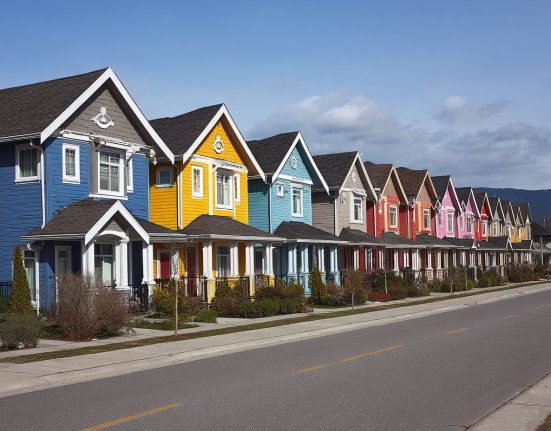

2025 marked a turning point for real estate. The post-pandemic market is firmly in place, and as the final weeks of the year wind down, momentum has slowed. Buyers are no longer rushing to move in. But rather, they’re recalibrating, reassessing, and looking ahead to what the next phase of the market will bring once the holiday season ends.
So what comes next? I spoke with top brokers, developers, and industry experts across the country about the forces set to shape the 2026 housing market.
Home Prices Will Stabilize, But Don’t Expect a Crash
Pricing is the question on everyone’s mind. While many potential buyers who are currently priced out of the market are hoping for a big crash, most brokers agree that dream is unlikely to come to fruition.
“Nationally, we’re not expecting a drop—more like modest appreciation of one to two percent. But the real story is how much things will vary locally. Some neighborhoods will soften, others will stay strong. 2026 is going to be a micro-market year where neighborhood-level data matters way more than national averages,” says Mike Martirena of the Ivan & Mike Team at Compass in South Florida.
So perhaps the solution for many of these buyers is to stop praying and start expanding their search criteria.
Mortgage Rates May Ease, But Buyer Psychology Will Shift More
The good news is that mortgage rates are expected to come down, but unfortunately the days of those two percent rates are unlikely to return anytime soon. “I believe the rates may come down, but modestly,” shares Libby McKinney Tritschler, broker with William Raveis, Team AFA. “I believe the bigger shift in 2026 will be buyer acceptance of the current mortgage rates. Buyers are adjusting to a world where five to six percent feels normal, and activity increases as confidence returns—not because rates crash. When the uncertainty settles, which I am already seeing, movement in the market will happen.”
Once potential buyers accept the reality of the market, it will make it far easier for them to decide if they are going to splurge on that new home, continue to rent, or perhaps invest in something that might be a little small or simply not their dream home.
Unsold Homes Will Become Rentals As Sellers Wait Out the Market
As homes sit on the market, sellers who can afford to move without freeing up their cash are increasingly entering a business they never planned on: becoming a landlord, at least temporarily. Martirena tells me, “We’re seeing more owners hold properties and lease them instead of selling into a flat market, especially if they can’t hit their number.”
Developers are taking a similar approach. According to the broker, many are currently building homes as rental properties, with plans to sell once market conditions improve.
AI Will Reshape Home Search, Pricing, And Broker Productivity
AI has already begun reshaping how buyers search for homes and how brokers operate. Its influence will only expand in 2026. Arman Javaherian, CEO & Co-Founder of Homa, believes this shift will largely benefit consumers. “By 2026, AI will enable new real estate platforms that look and feel very different from the home search sites consumers are used to today. Instead of simply helping people browse listings, these platforms focus on helping buyers understand what actually matters, including pricing tradeoffs, potential risks, and what it really takes to move from browsing to ownership. As AI takes on more of the analysis and process work, it is also forcing a rethink of how real estate companies operate behind the scenes.”
While many in the real estate industry have been cautious of AI or even feared its influence, it’s clear the cat is out of the bag, and accepting its influence isn’t merely crucial; it’s actually beneficial.
AI Won’t Replace Agents, But It Will Change How They Work
Brandon Charnas, co-founder of Current Real Estate Advisors is a great example of this, seeing AI as a powerful productivity tool rather than a threat. He reveals, “I use Chat GPT frequently, including to simplify reading leases, sending emails, and handling (the removal) of sensitive data from deals. I predict that people will catch on to AI (if they haven’t already) and become more comfortable with it as a path to the future of real estate.”
However, while AI has replaced some jobs, Charnas doesn’t think it’s taking his. “While it isn’t and cannot replace the human impact of a broker and the relationships that we have including knowledge of off-market deals and relationships, it can certainly set everyone up for far more productivity.”
Another proponent of this technology is Jennifer Roberts, a real estate broker at Coldwell Banker Warburg in New York City, who is already using AI to improve pricing accuracy, which can be one of the biggest challenges agents experience when selling a property.
“AI tools will enable brokers to give more precise pricing advice to their sellers. Agents can share with sellers the precise data — renovation quality, floor height, ceiling height, views, type of building, etc. — used to come up with precise data. And hopefully, this will alleviate the bane of brokers: overpricing a home. Brokers will look smarter as prices will be data-driven rather than subjective.”
The biggest benefit? Reducing a listing’s days on the market. “A quicker sale can lead to a better chance of a strong offer if a home spends less time on the market and is not defined as stale.”
Design Will Become A Major Differentiator In A Flat Market
Buyers are more design-savvy than ever these days. Blame social media or obsession with microtrends, but after years of virtually interchangeable interiors (think quartz countertops and black hardware), this sameness is now working against sellers. “Design has always mattered in New York, but its importance is accelerating. Years of new development have delivered interiors that look increasingly identical: the same neutral palettes, the same furnishings, and the same staging choices. What once felt modern and clean now feels predictable, even uninspiring,” Vickey Barron, a top broker with Compass, tells me.
These overdone aesthetics have lead to buyer fatigue and less overall excitement with the current offerings available.
“As they scroll through listings or walk through apartments that all look the same, interest fades. There is no emotional connection, no sense of discovery. A home should create a visual reaction that stops someone in their tracks and makes them want to linger. Uniqueness, quality materials, and thoughtfully chosen elements that tell a story give a home that power,” reveals Barron.
Unique Interiors Will Command Stronger Pricing
As a result, investing in distinctive finishes and thoughtful design is no longer considered risky, it’s a smarter financial move, according to Barron. “Going forward, homes that stand out through design, craftsmanship, and consistency will command attention and pricing strength. I often caution sellers that the wrong furnishings alone can cost them hundreds of thousands of dollars by distracting buyers rather than drawing them in.”
Professional Staging Will Be Non-Negotiable In 2026
Sellers hoping to maximize value without staging are likely leaving money on the table.
“Every listing needs to be camera-ready. In a flat-price environment, buyers reward certainty—clean condition, good design, and fewer perceived projects,” says Martirena. “If it doesn’t win on a phone screen, it won’t win in person.”
In the luxury market, presentation is even more critical, according to Lisa Simonsen, a top broker at Brown Harris Stevens. “In 2026, the luxury buyer will continue to shop visually and quickly, often before an in-person visit. That raises the importance of lighting, scale-appropriate furnishings, art placement, and a cohesive aesthetic that both photographs and shows credibly. Proper presentation will increasingly function as a pricing lever rather than a finishing touch.”
Virtual Staging Will Improve, But In-Person Impact Still Matters
For more budget-conscious sellers, virtual staging remains an option and AI has made it far more convincing than in previous years. “You used to be able to spot virtual staging from a mile away. It often looked incredibly fake and tacky. Now it can be difficult to tell what is virtual staging and what is a real photo,” notes Abigail Godfrey of Coldwell Banker Warburg.
Off-Market Sales Will Increase In Competitive Neighborhoods
If you’re walking around your neighborhood and noticing moving trucks but few listings, off-market deals may be the reason. “Sellers want control and privacy, while buyers want access. This favors well-connected, relationship-driven agents. The most interesting deals rarely start on a public website,” says Mike Fabbri of The Agency.
But, Private Listings Will Primarily Benefit The Ultra-Luxury Market
That strategy, however, isn’t for most sellers and really only benefits those with ultra luxury listings, explains Simonsen. “Why privately list if your subdivision or condo building has dozens of near-identical units? For most properties, the key to maximizing value will be publicly marketing the listing and capturing the widest possible pool of potential buyers.”
Insurance Costs And Climate Resilience Will Influence Buyer Decisions
Insurance and operating costs are also becoming central to buying decisions. “Especially here in Florida, insurance and operating costs are becoming first-order variables. Buyers are valuing roof age, flood/fire mitigation, impact glass, power backup—all the things that reduce risk and long-term cost,” Martirena notes.
However, this mindset is becoming more prominent nationwide. For example, in Los Angeles, one of the first rebuilt homes following recent wildfires in Pacific Palisades now includes a fire-defense system designed to protect the structure during future disasters, a feature expected to become increasingly common, especially in areas where wildfires are common and insurance premiums are at all-time highs.
Move-In-Ready Homes Will Outperform Renovation Projects
The definition of “move-in ready” is evolving. In 2026, it increasingly means fully renovated and fully furnished. “We also anticipate continued bidding wars for properties that are ready to move into,” states Shaun Pappas, Partner at Starr Associates. “The continued rise in construction costs, including labor and materials, has made it more difficult for home purchasers to buy and perform renovations. Therefore, we see a potential decrease in the housing prices for homes that need renovation work, and an increase in housing prices for homes that are ready to be occupied.”
After a challenging 2025, it’s clear why buyers want some part of the buying process to be as easy as possible.