
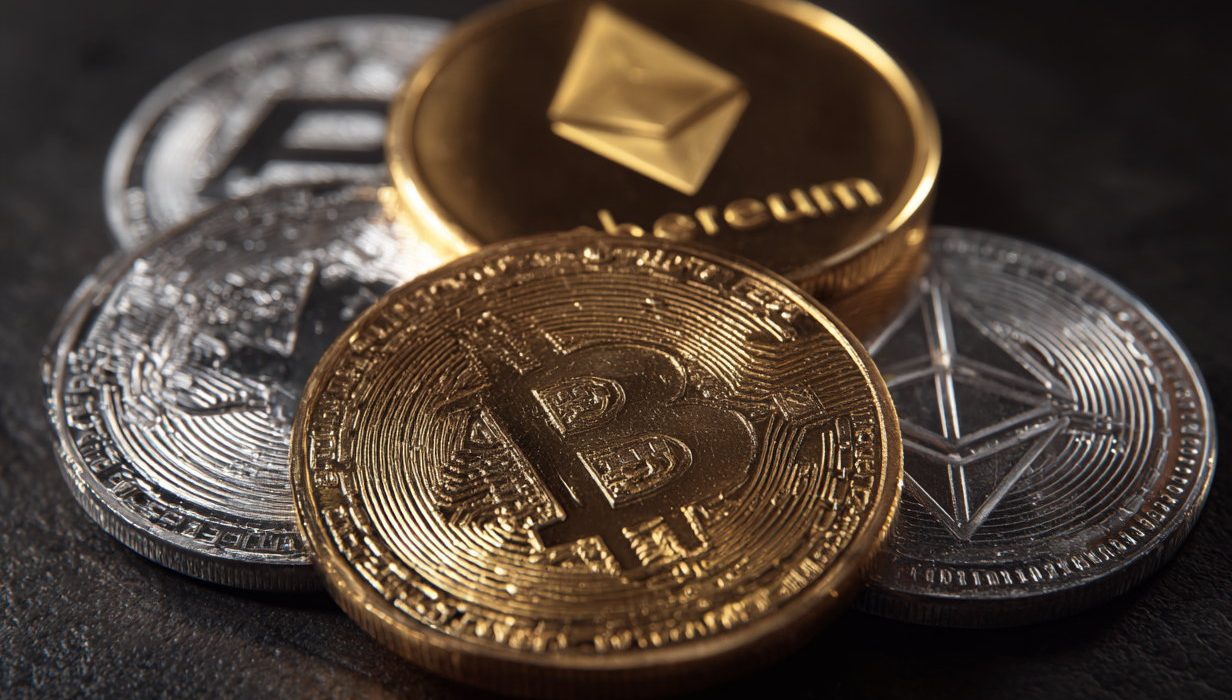
Bitcoin (BTC) has not just been a trendsetter, ushering in a wave of cryptocurrencies built on a decentralized peer network. It has also become the de facto standard for cryptocurrencies, inspiring a legion of followers and spinoffs. However, like Bitcoin, cryptocurrencies come with a vast amount of risk. Do your research to find out which of them, other than Bitcoin, are doing well before blindly investing in cryptocurrency.
You can do that research through leading crypto exchanges, which equip traders with sophisticated tools to help them add the best cryptocurrency to their portfolio. Here are some alternative cryptocurrencies that have remained important throughout the steep price climbs and nosedives.
What Are Cryptocurrencies?
A cryptocurrency is a virtual or digital money that takes the form of tokens or coins. The cryptocurrencies modeled after Bitcoin are collectively called altcoins. They have sometimes tried to present themselves as modified or improved versions of Bitcoin.
The “crypto” in cryptocurrencies refers to the cryptographic techniques that allow for the creation and processing of digital currencies. They include a common commitment to remaining decentralized. Cryptocurrencies are typically developed by teams that build in mechanisms for issuance and other controls.
Cryptocurrencies are almost always designed to be free from government manipulation and control. The core of the industry has weakened due to regulatory developments, although they’re more popular.
Types of Altcoins
Cryptocurrencies
Cryptocurrencies are intended for payments. They transmit value akin to digital money across a decentralized network of users. Many altcoins, other than Bitcoin or sometimes Ethereum, are classified in this way.
Tokens
Blockchain-based tokens are meant to serve a different purpose from that of money. One example could be a token issued as part of an initial coin offering (ICO) that represents a stake in a blockchain or decentralized finance (DeFi) project. They can be called security tokens, as in securities like stocks, not safety, if the tokens are linked to the value of the company or project.
Other tokens have a particular use case or function. Examples include Storj tokens, which let people share files across a decentralized network, or Namecoin. This provides a decentralized Domain Name System (DNS) service for internet addresses. These are known as utility tokens.
Many crypto users understand and appreciate these differences, but traders and lay investors may not notice the difference because all categories of tokens tend to trade on crypto exchanges in the same way.
1. Ethereum (ETH)
Ethereum is a decentralized software platform that lets developers build and run smart contracts and decentralized applications (dApps) without downtime, fraud, control, or third-party interference. Ethereum aims to create a decentralized suite of financial products that anyone can freely access globally, regardless of nationality, ethnicity, or faith.
This makes the implications for people in some countries more compelling. People without state infrastructure or identification can still access bank accounts, loans, insurance, and other financial services.
Ethereum uses Ether, its platform-specific cryptographic token. Ether is used to pay validators who stake their coins for their work on the blockchain, as an off-chain payment method, and as an investment by speculators.
2. Tether (USDT)
Tether was one of the first and most popular of the stablecoins: alternative cryptocurrencies that aim to peg their market value to a currency or other external reference point to reduce volatility. Even major digital currencies like Bitcoin have experienced frequent periods of dramatic volatility, Tether and other stablecoins attempt to smooth out price fluctuations to attract users who may otherwise be cautious.
Tether’s price is tied directly to the U.S. dollar because the developers claim to hold one U.S. dollar or an equivalent for every circulating USDT. This system allows users to more easily make transfers from other cryptocurrencies back to U.S. dollars in a more timely manner than actually converting to standard currency.
This cryptocurrency was launched in 2014. Tether allows individuals to utilize a blockchain network and related technologies to transact in traditional currencies while minimizing the volatility and complexity often associated with digital currencies.
Tether’s market cap stood at over $190 billion on May 13, 2026. The asset had a price of about $1.
3. Binance Coin (BNB)
Binance Coin is a utility cryptocurrency that operates as a payment method for the fees associated with trading on the Binance Exchange. Those who use the token as a means of payment for the exchange can trade at a discount.
Binance Coin’s blockchain is also the platform on which Binance’s decentralized exchange operates. The Binance Exchange was founded by Changpeng Zhao and Yi He, and is one of the world’s most widely used exchanges.
Binance Coin was initially an ERC-20 token that operated on the Ethereum blockchain. It eventually launched a mainnet, and it uses a PoS consensus model. It had a market cap of over $91.5 billion on May 13, 2026. One BNB was valued at around $678.68.
4. Solana (SOL)
Founded in 2017, Solana is a blockchain platform designed to support decentralized applications (dApps). Also referred to as an “Ethereum killer,” Solana performs many more transactions per second than Ethereum. It also charges lower transaction fees than Ethereum.
Solana and Ethereum can utilize smart contracts, which are essential for running cutting-edge applications. They include decentralized finance (DeFi) and non-fungible tokens (NFTs).
The cryptocurrency running on the Solana blockchain is known as Solana (SOL). Its price has risen tremendously since its inception. Solana had a market cap of over $55 billion and was valued at around $94 per coin as of May 13, 2026.
5. USD Coin (USDC)
USD Coin is another stablecoin that also pegs its price to the U.S. dollar using fiat-collateralized reserves. It holds an amount of fiat currency equal to the amount of USD Coin in circulation.
It was launched in 2018 by the Centre Consortium. It consisted of Circle and Coinbase, which are no longer part of the project. Circle is based in the U.S., so it is subject to regulation, making USDC a regulated stablecoin.
USD Coin had a market cap of over $77 billion and a price per coin of $0.999 as of May 13, 2026.
6. XRP (XRP)
XRP is the native token for the XRP Ledger, which was created by Ripple in 2012 as a payment system. The XRP Ledger uses a consensus mechanism called the XRP Ledger Consensus Protocol, which doesn’t use proof-of-work or proof-of-stake for consensus and validation.
Client applications instead sign and send transactions to the ledger servers. The servers then compare the transactions and conclude whether they are candidates for entry into the ledger. The servers then send the transaction candidates to validators, who work to agree that the servers got the transactions right and record the ledger version.
XRP had a market cap of about $90 billion and traded at $1.45 on May 13, 2026.
7. Dogecoin (DOGE)
Dogecoin is considered to be the original “memecoin.” It caused a stir in 2021 as its price skyrocketed. The coin uses an image of the Shiba Inu as its avatar. It is accepted as a form of payment by some major companies.
Dogecoin was created by software engineers, Billy Markus and Jackson Palmer, in 2013. Markus and Palmer reportedly created the coin as a joke, commenting on the wild speculation of the cryptocurrency market.
Its market cap was over $17 billion as of May 13, 2026. One DOGE was valued at around $0.11.
8. Tron (TRX)
The TRON Foundation launched in 2017 to provide digital content creators with full ownership rights through tokenization and dApps. TRX’s launch aimed to give developers a way to create dApps. TRON purchased BitTorrent, a popular file-sharing program, in 2018, and integrated it into the TRON blockchain. TRON has since shifted to a decentralized finance platform.
TRON’s native token, TRX, is used to pay for on-chain transactions and as a payment method on exchanges. Anyone holding TRX can apply to become a Super Representative with the authority and obligation to validate transactions and create new blocks for the blockchain.
The cryptocurrency’s consensus mechanism is a tweaked version of Ethereum’s proof-of-stake called designated proof-of-stake (DPoS), where the network votes for the super reps. TRX had a value of around $0.35 per coin and a market cap of over $33 billion on May 13, 2026.
9. Toncoin (TON)
Toncoin is the native token for The Open Network, originally developed by the Telegram team. The Telegram team abandoned the project in 2020 after the Securities and Exchange Commission filed charges against it for an unregistered security offering.
The project was picked up by Telegram CEO Pavel Durov’s brother, Dr. Nikoli Durov, and development continued through the TON Foundation. TON traded at around $2.23 per coin, with a market cap of about $5.9 billion on May 13, 2026.
10. Cardano (ADA)
Cardano is an “Ouroboros proof-of-stake” cryptocurrency that was created using a research-based approach by engineers, mathematicians, and cryptography experts. The project was co-founded by Charles Hoskinson, one of the five initial founding members of Ethereum. Hoskinson left after disagreeing with the direction that Ethereum was taking and later helped to create Cardano.
The team behind Cardano created its blockchain through extensive experimentation and peer-reviewed research. The researchers behind the project have written about 30 papers on blockchain technology across various topics. This research is the backbone of Cardano.
Cardano stands out among its PoS peers and other prominent cryptocurrencies due to this rigorous process. Cardano has also been dubbed an “Ethereum killer” because its blockchain is said to be capable of more.
Cardano aims to be the world’s financial operating system by establishing DeFi products similar to Ethereum’s. It hopes to provide solutions for chain interoperability, voter fraud, and legal contract tracing, among other things. Cardano had a market capitalization of about $9.8 billion on May 13, 2026. One ADA traded for around $0.27.
Honorable Mentions
There are many other important cryptocurrencies out there, and they jockey for recognition over time in terms of user bases, market value, and influence. Some other important cryptocurrencies as of May 13, 2026 include but aren’t limited to:
Which Is the Next Crypto to Boom?
It is difficult to say which crypto will boom next because so many projects are being developed. Market sentiments swing wildly.
What Crypto Is in High Demand?
Bitcoin is currently in high demand because of the returns it has created in the past.
What Is the Most Important Crypto?
Despite the thousands of competitors that have sprung up, Bitcoin, the original cryptocurrency, remains the dominant player in terms of usage and economic value. None has matched its market cap and value so far.
The Bottom Line
Bitcoin is still the most popular cryptocurrency, but its introduction in 2009 spawned a host of imitators, alternatives, and new technologies based on its blockchain and many of the theories behind it.
These alternative coins are collectively called altcoins. Their purposes range from being a joke to a coin that pays for transactions on a distributed and global virtual machine. Where they will all end up is anyone’s guess, but the years that have passed since they first appeared seem to suggest they aren’t going anywhere soon.